
On this page
- A quick test
- What to weigh
- Three common Duluth cases
- Costs over time
- Storm damage and insurance
- When half the house is fine
- A simple decision rule
- What a repair visit should include
- What a replacement should fix
- Getting an honest answer
- Builder gutters from the 1990s
- Three common Duluth situations, side by side
- When half the house is fine
- Before you call
- Repairs that buy time
- Repair, replace and resale
- The bottom line
A quick test
Duluth Gutter Group connects callers with independent local gutter contractors, who give the estimates and do the work.
| Problem | Repair | Replace |
|---|---|---|
| One or two dripping joints | Yes | |
| Leaks at many seams | Yes | |
| One sagging run, sound metal | Yes | |
| Sagging everywhere, soft fascia | Yes | |
| One run creased by a limb | Yes | |
| Rust holes in steel | Yes | |
| Overflow at one valley | Add an outlet | |
| Overflow everywhere | Upsize |
What to weigh
- Condition of the metal.
- Type: sectional with many leaking seams is a poor candidate.
- Wood behind.
- Capacity.
- Storm history.
- Plans: selling soon, or staying?
Three common Duluth cases
The 1970s ranch in Norcross. Original 5-inch gutters on spikes, corners dripping, downspouts emptying at the foundation. The gutters are near the end of their life and the discharge needs work anyway, so most owners replace with seamless on hidden hangers and lead water away.
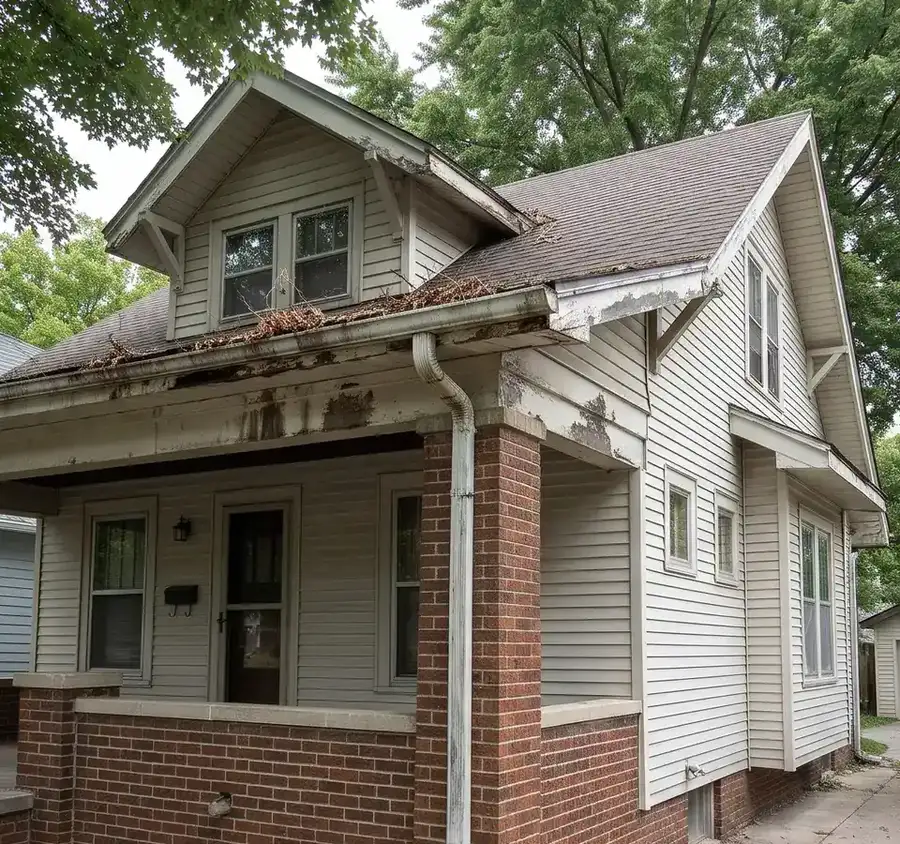
The 1995 two-story in Duluth. Builder seamless gutters, mostly sound, overflowing at a back valley and leaking at two corners, with some soft fascia behind them. Often this is a repair: reseal, add a 3x4 outlet, replace the soft board. If soft wood runs along most of the house, replacement wins.
The 2005 home near Sugarloaf. Gutters sound, but trees have grown in. Clean, reseal and add guards.
Costs over time
A repair costs less on the day, but repeated repairs on failing gutters add up, and each overflow costs something in wet fascia and damp basements. Replacement resets the clock.
Storm damage and insurance
A policy may pay for damaged runs, minus the deductible, but not for wear on the rest. Photograph damage first, call the insurer before signing, and get an estimate that separates storm damage from other work.
When half the house is fine
One side often fails first: the north side under trees, or the back with valleys. Replacing the worst runs and repairing the rest is a reasonable middle path.
A simple decision rule
If repairs needed now cost more than about a third of a new system, and the gutters are 15 to 20 years old or more, replacement usually wins over the next decade.
What a repair visit should include
- Finding the actual cause, not just the symptom.
- Proper materials: gutter sealant, rivets and screw-in hangers.
- A water test afterwards.
- Notes on anything else found, priced separately.
What a replacement should fix
- Leaks, with seamless runs.
- Sagging, with hidden hangers into sound wood.
- Overflow, with the right size and more downspouts.
- Rot, by repairing fascia first.
- Drainage, by leading downspouts away from the foundation.
Getting an honest answer
Ask the contractor to show you what they see: photos of rot, a video of the leak, the pitch on a level. A contractor who can repair should say so when repair is enough. Getting more than one written bid, as the Georgia Attorney General advises, shows where the line falls.
Builder gutters from the 1990s
Duluth has a great many houses from the 1990s with original builder gutters. Those are often the hardest call: the metal may be sound, but the corners leak, the hangers are wide-spaced and the fascia behind is starting to soften. If only a few corners leak, repair. If the fascia is soft along most runs, replace. See gutters on 1980s and 1990s homes.
Three common Duluth situations, side by side
| Situation | Usual answer |
|---|---|
| 1970s ranch, original gutters on spikes, corners dripping | Replace with seamless; fix discharge |
| 1990s two-story, sound gutters, valley overflow, two leaking corners | Repair; add outlets |
| 1990s two-story, soft fascia on most runs | Replace with fascia repair |
| 2005 home, gutters sound, trees grown in | Clean, reseal, add guards |
| Any house with rusting steel | Replace |
When half the house is fine
One side often fails first: the north side under trees, or the back with valleys. Replacing the worst runs and repairing the rest is a reasonable middle path, as long as new and old meet at corners and colors are close.
Before you call
Walk the house in the next heavy rain and note where water spills, drips or runs behind the gutter. Look at the fascia for peeling paint and stains. Note where each downspout ends. With that list, a contractor can tell you quickly whether you are looking at a repair visit or a replacement, and price both.
Repairs that buy time
Resealing corners, re-hanging on screw-in hangers, adding an outlet at a valley and extending downspouts are all modest jobs that can add years to sound gutters.
Repair, replace and resale
If you plan to sell within a year or two, a thorough repair with receipts may be enough to satisfy a buyer's inspector. If you plan to stay ten years or more, replacement with better sizing, hangers and discharge usually pays off in fewer repairs and a drier foundation.
The bottom line
Repair what is sound; replace what is failing everywhere. See gutter repair and gutter replacement.