
On this page
- Duluth's boom years
- What builders usually installed
- What to check
- Repair or replace?
- Upgrades worth making at replacement
- Basements and slopes
- HOAs from the era
- A typical inspection
- Costs to expect
- Selling a boom-era house
- Questions to ask a contractor about a boom-era house
- Living with the trees
- Where these houses are
- What to do this year
- The bottom line
Duluth's boom years
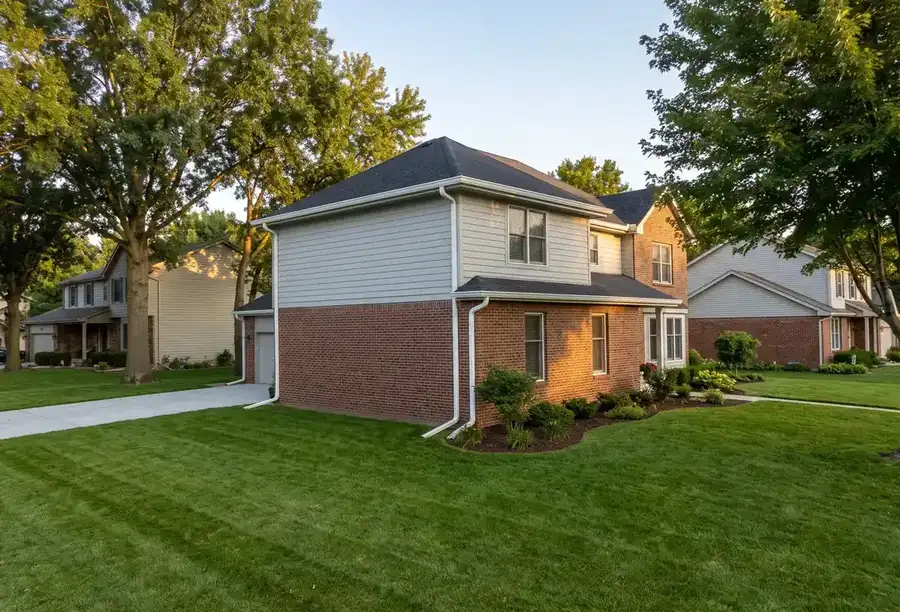
Duluth Gutter Group connects callers with independent local gutter contractors, who give the estimates and do the work. Duluth had 2,956 people in 1980, 9,029 in 1990 and 22,122 in 2000, according to the census. Most of today's housing went up in those two decades and the years just after, along Pleasant Hill Road, Duluth Highway, Peachtree Industrial Boulevard and the roads off them.
What builders usually installed
| Item | Typical then | Common problem now |
|---|---|---|
| Gutters | 5-inch seamless aluminum, 0.027 inch | Dents; sealant failure at corners |
| Hangers | Spikes and ferrules, or wide-spaced hangers | Sagging; spikes backing out |
| Downspouts | 2x3 inch | Clogging under pines; overflow at valleys |
| Fascia | Finger-jointed pine, painted | Rot behind corners and outlets |
| Drip edge | Sometimes missing | Water behind the gutter |
| Discharge | Splash blocks at the wall, or buried lines | Wet basements; clogged lines |
What to check
- Corners and end caps. Run a hose and watch.
- Hangers. Look for spike heads or gutters pulling from the fascia.
- Valleys. Watch them in a storm.
- Fascia. Look for peeling paint and probe soft spots.
- Downspouts. Note where each empties.
- Buried lines. Check that water comes out at the far end.
Repair or replace?
On a 1990s house with sound gutters, resealing corners, re-hanging on screw-in hangers and adding 3x4 outlets can buy years. When fascia is soft along most of the house, or the gutters leak at many points, replacement makes more sense. See repair or replace.
Upgrades worth making at replacement
- 6-inch gutters on runs below valleys.
- 3x4 downspouts everywhere under trees.
- 0.032 inch aluminum for stiffness.
- Hidden hangers about every 2 feet.
- Drip edge where missing.
- PVC or composite fascia where wood is soft.
- Guards under pines.
- Discharge led away from basements.
Basements and slopes
Many Duluth houses from these years were built into slopes with basements. Builders often left downspouts emptying at the wall or into buried lines that are now clogged. Rerouting uphill downspouts around the house, and checking buried lines, protects the foundation. See downspout drainage.
HOAs from the era
Swim-and-tennis subdivisions from the 1980s and 1990s often have associations with color rules. Get the rule before ordering.
A typical inspection
A contractor looking at a 1990s Duluth house will usually walk each side and note:
| Check | What they look for |
|---|---|
| Corners | Stains, drips, failed sealant |
| Hangers | Spike heads, sags between hangers |
| Valleys | Splash marks, overflow stains below |
| Fascia | Peeling paint, soft spots, gaps behind the gutter |
| Drip edge | Present or missing |
| Downspouts | Size, straps, where each empties |
| Buried lines | Whether water reaches the far end |
| Trees | Limbs over the roof; debris load |
Costs to expect
A repair visit on a boom-era house might reseal several corners, add hangers and replace a few feet of fascia. A replacement covers the whole system with better hangers, larger downspouts, new fascia where needed and improved discharge. National ranges put 5-inch seamless aluminum at about $9 to $13 a foot installed and 6-inch at $12 to $18. See the cost guide.
Selling a boom-era house
Buyers' inspectors often note gutter and fascia problems on 1990s houses: leaking corners, soft fascia and downspouts emptying at the foundation. Fixing those before listing, with receipts, can save a round of negotiation.
Questions to ask a contractor about a boom-era house
- Are the original gutters worth keeping, or due for replacement?
- How much fascia rot do you expect, and how will it be priced?
- Would 6-inch gutters or extra outlets fix the valley overflow?
- Will you add drip edge where it is missing?
- Where will each downspout discharge, especially on the uphill side?
- Can you match our association's color?
Living with the trees
Subdivisions built in the 1980s and 1990s were often cleared and replanted, or built around existing pines. Thirty years later the trees are tall, and gutters that never needed guards now fill every season. Price guards when you replace.
Where these houses are
Boom-era homes are spread across Duluth and its neighbors: subdivisions off Pleasant Hill Road, Duluth Highway, Old Peachtree Road and McGinnis Ferry Road, and in Suwanee, Snellville and Lawrenceville. Each area page notes the housing there. See service areas.
What to do this year
- Run a hose through each run and note leaks.
- Watch a storm and note overflow at valleys.
- Probe the fascia where paint is peeling.
- Follow each downspout to see where water goes.
- Call for a written price on whatever you find.
The bottom line
On a boom-era Duluth house, expect the gutters to need either a thorough repair or a replacement with better sizing, hangers and discharge. Fix the fascia while the gutter is down.